August 25, 2025
B2B Payment Processing
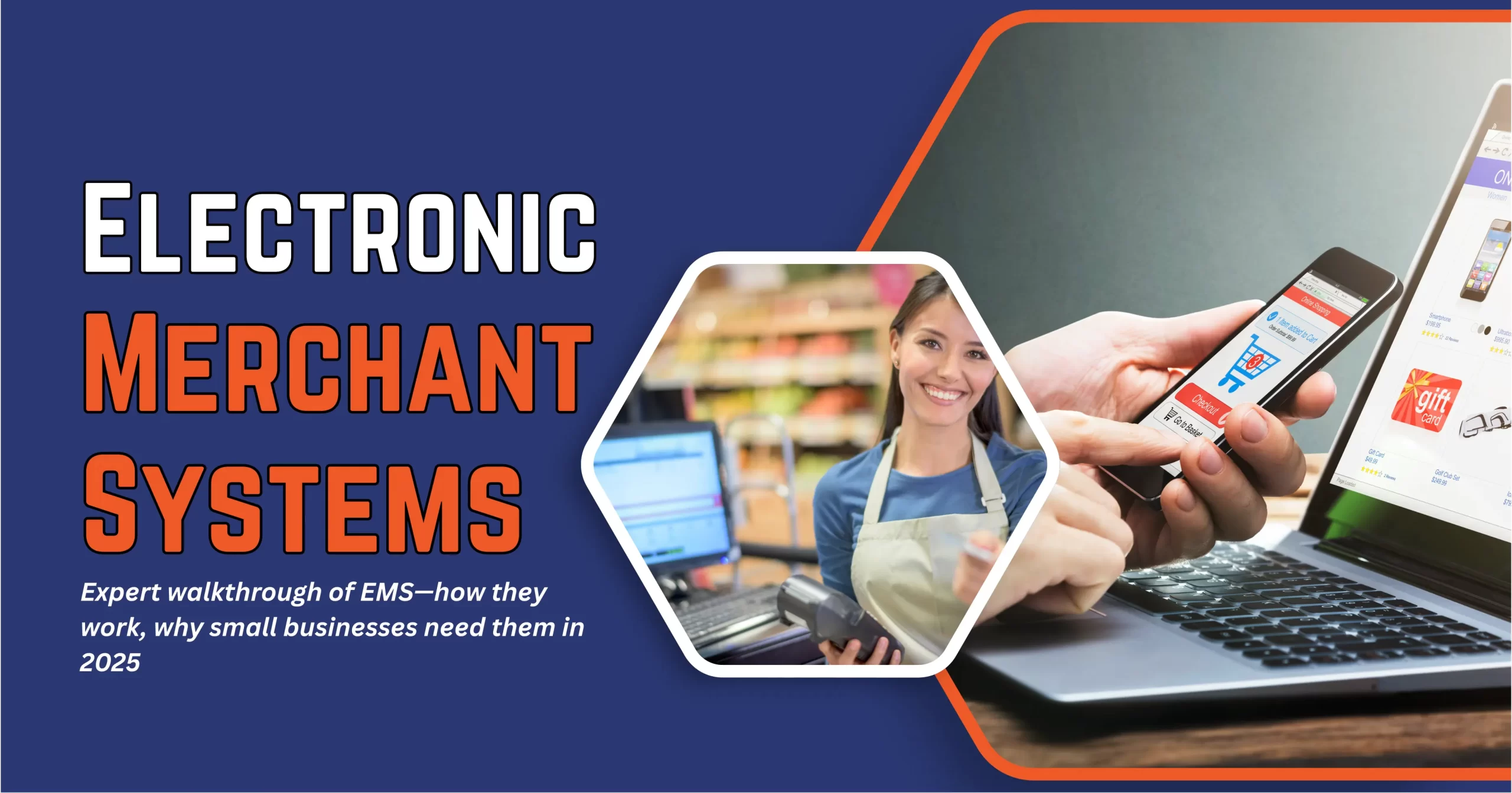
Electronic Merchant Systems — A Beginner’s Guide!
If you’ve ever wondered what Electronic Merchant Systems (EMS) are, why buzzing small businesses in the U.S. are using them, and how to pick one, well, consider this your down-to-earth, expert-level guide. Let’s take a relaxed yet insightful journey together:
What Are Electronic Merchant Systems?
So, EMS basically refers to the technology stack, hardware, software, and services that businesses use to accept credit card payments and other digital payments. Think of it as the friendly middleman between your customer’s card and your bank account, often including gateways, processors, virtual terminals, and POS tools. In short, EMS makes payment seamless, secure, and (ideally) invisible to the customer.
How Electronic Merchant Systems Work —
Here’s how the money magic happens:
- Customer swipes or taps their card (or types info online).
- Transaction data hits the payment gateway.
- The gateway passes it to the processor, which connects to card networks and the issuing bank.
- Bank approves or declines.
- Status returns through the gateway to your system.
- Finally—but sometimes across a few business days—the funds land in your merchant account.
In the U.S., credit and debit cards still dominate online payments, but digital wallets like Apple Pay and PayPal are climbing fast, making up around 30% of digital checkout methods.
Globally, EMS setups can vary. Europe leans into things like SEPA Instant and PSD2 rules, but here in the U.S., we’re seeing faster innovation in fraud detection, AI tools, and embedded finance.
Why Small Businesses Need an EMS in 2025 —
Okay, why should small businesses care right now? Three solid reasons:
- Customer expectations: In today’s world, customers expect smooth, secure payments; no one wants to fumble with checks or outdated systems.
- Better cash flow & insights: Modern EMS platforms don’t just process payments; they integrate with your accounting software or POS Systems, providing real-time reporting and analytics that help you manage your business more effectively.
- Embedded, smarter systems: The U.S. embedded finance market for small businesses could be worth up to $124 billion by 2025, thanks to tools that merge payments, wallets, carts, and CRM into one flow.
Step-by-Step Guide to Setting Up an EMS —
Here’s a no-stress action plan:
- Define your needs – Online only? In-person? Mobile? Mix?
- Compare providers – Think about fees, setup, integrations, and support.
- Apply and set up – You’ll fill out an application, go through underwriting, and get merchant account and gateway details.
- Integrate – Hook it into your site (via plugins or API) or install your POS / mobile reader.
- Test – Run test transactions, check settlement, simulate refund or chargeback scenarios.
- Go live – Open for business, monitor closely, and keep an eye on reporting.
Providers like Paycron offer credit card merchant services, ACH, plus check-21 options or online check writing tools, so you can accept eChecks alongside card payments with one partner.
Common Challenges and How to Solve Them —
Things can get bumpy. Here’s what small business owners often hit, plus what helps smooth it out:
- Hidden fees & confusing pricing ? Always read the fine print. Look for transparency or flat-rate options like Square or Stripe for simpler pricing.
- Integration headaches ? Choose systems that sync with tools you already use (e.g., QuickBooks, Shopify). Square, for example, leads in POS integration for U.S. SMBs.
- Fraud & compliance worries ? Pick EMS with built-in tokenization, AI fraud tools, and PSC-DSS compliance. The trend is toward AI-driven fraud prevention that adapts in real time.
- Legacy tech limitations ? If you’re stuck with slow checkout or aging POS hardware, SoftPOS (software POS on a phone or tablet) is a friction-busting game-changer no extra hardware, high security, and great for mobile vendors or pop-ups.
How to Choose the Best EMS Provider for Your Business Needs —
Here’s what to consider as you’re shopping around, especially weighing options like Paycron, which offers both credit card services and digital check solutions:
- Service mix – Do you need card payments, eChecks, online check writing? A one-stop provider like Paycron can simplify things.
- Fee transparency – Flat rates are easier to budget. Platforms like Paycron, Square, Stripe, and PayPal often lead here.
- Ease of setup – Paycron promises fast integration and live payments in “a few days”.
- Support & risk handling – Do they support high-risk Businesses? Are they proactive about chargebacks or underwriting issues? Paycron emphasizes tailored merchant support.
- Ecosystem & data integration – If you want loyalty programs, embedded finance, or embedded payments, choosing a provider that syncs with ISVs and your CRM matters.
Quick Recap —
- EMS = the tech that powers seamless payments.
- Works via gateway ? processor ? bank ? settlement chain.
- Small businesses need EMS for speed, convenience, cash flow, and modern customer expectations.
- Setup: pick needs, select provider, apply, integrate, test, go live.
- Challenges: fees, tech friction, fraud, legacy systems fix via smart provider choice and modern tools like SoftPOS.
- Choosing the right provider means assessing features, support, costs, integration ease consider Paycron if you need both card and eCheck services with fast onboarding.
FAQs – People also Ask:
Q: What’s the difference between EMS and a payment gateway?
EMS refers to the full payment acceptance ecosystem (accounts, gateway, terminal), while the gateway is just the software link between your checkout and the payment network.
Q: Are eChecks still relevant in 2025?
Definitely, check use is declining, but eChecks offer a low-cost, automated payment method, especially for B2B or recurring invoices.
Q: Why might SoftPOS be better than traditional POS?
SoftPOS turns any compliant mobile device into a secure payment terminal—eliminating hardware costs and reducing queues, especially helpful for small or mobile businesses.
Q: How is AI shaping EMS fraud protection?
AI is increasingly used to analyze transaction behaviors in real time, personalize fraud detection, and reduce false declines, raising trust and approval rates.
Q: How does the U.S. digital payment landscape compare globally?
The U.S. still relies heavily on cards, but digital wallets are growing fast. In contrast, many countries use unified QR-code systems or instant bank transfers under government regulation (e.g., SEPA Instant in Europe).

More related blogs
- payment processing
- Fintech trends
What is Visa’s Digital Commerce Authentication Program (DCAP) — Everything you need to know! 
- payment processing
- Fintech trends

- B2B
- merchant advocacy
Why ACH and Credit Card Limits Are Quietly Killing Merchant Growth?
- B2B
- merchant advocacy

- B2B Payment Gateway
- fintech payment solutions
Simplify Payment Plugin Integration for Online Businesses!
- B2B Payment Gateway
- fintech payment solutions


