August 8, 2025
B2B Payment Processing
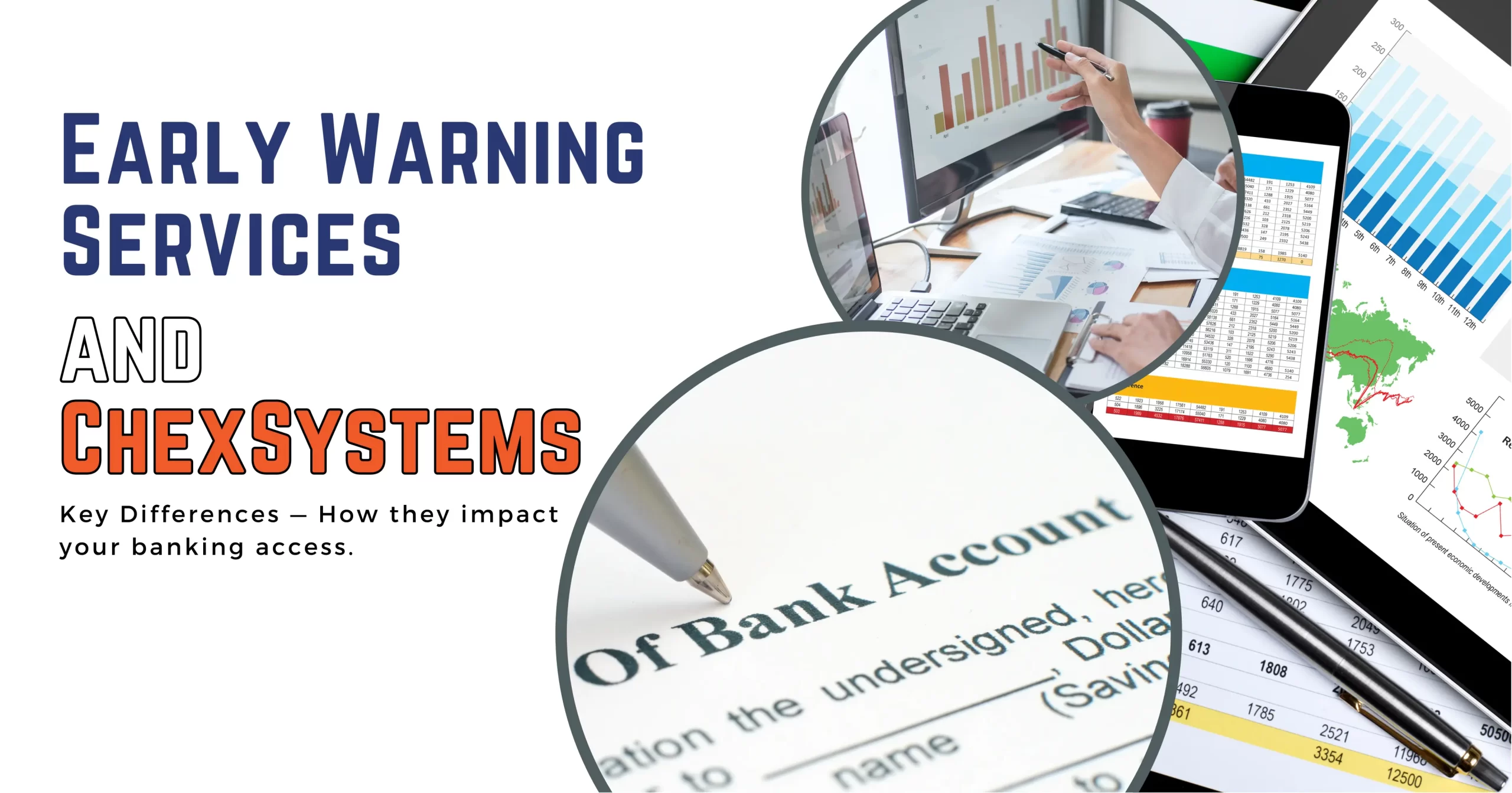
EWS vs. ChexSystems — Banking Report Insights!
Being denied a bank account can be downright frustrating. More often than not, two big players are behind the scenes: Early Warning Services (EWS) and ChexSystems. Both are consumer-reporting agencies that help banks and credit unions decide whether to approve your application. Yet, they’re not the same thing, and knowing how they differ could be key to getting your next checking account approved.
What Do These Companies Actually Do?
Early Warning Services (EWS) is a fintech-like network owned by major U.S. banks—like Bank of America, JPMorgan Chase, Wells Fargo, and others—that shares data on deposit accounts, suspicious activity, fraud, and more across over 2,500 institutions.
On the other side, ChexSystems is a consumer reporting agency under FIS that banks widely use to screen applicants for checking or savings accounts. It flags issues such as overdrafts, bounced checks, and involuntary account closures.
Top Differences EWS vs. ChexSystems —
Here’s a quick breakdown to help you see the distinctions:
| Feature | Early Warning Services (EWS) | ChexSystems |
| Purpose | Fraud detection, real-time account risk sharing | Historical screening for deposit account misuse |
| Owners | Co-owned by major banks (e.g., BofA, Chase, Wells Fargo) | Owned by FIS via eFunds |
| Data Collected | Fraud alerts, account closures, returned ACH, and malicious behavior | Overdrafts, unpaid fees, check fraud, closed accounts |
| Record Duration | Up to 7 years for negative entries | Generally 5 years |
| Update Frequency | Near real-time | Periodic or slower updates |
| Institutions Using It | Member banks, fintechs, and payment processors | Widely used by U.S. banks and credit unions |
| Consumer Access | Free annual report under FCRA | Free annual access under FCRA |
How People Experience These in Real Life —
In real life, these systems can make banking feel like a maze:
“They’re separate systems, but used for the same purposes — a smaller bank is more likely to use ChexSystems in my experience.”
“You might be able to get an account with an institution that checks EWS only, such as BofA, even if you have a ChexSystems report.”
That means you might show a ding on ChexSystems but still get access through a bank that only checks EWS, or vice versa.
What You Can Do If You’re Flagged —
- Request both reports; you’re entitled to one free report per year under FCRA.
- Check for errors or outdated info.
- Dispute mistakes. Both agencies must investigate and correct inaccuracies.
- Explore second-chance accounts, which are low-risk accounts offered by some banks to help rebuild your credit history.
- Consider prepaid options, not ideal for building history, but workable in the short term.
Final Thoughts —
Here’s the takeaway—EWS and ChexSystems both influence your ability to bank, but in different ways and with overlapping, yet distinct, criteria. ChexSystems focuses on past mistakes, while EWS concentrates on current risk and fraud. Being proactive, checking your reports, disputing errors, and targeting the right institutions puts you ahead of the curve.
Early Warning Systems FAQs —
Q: Can I be listed in both EWS and ChexSystems?
Absolutely. They’re separate systems; one bank may report you to both—or just one—depending on the issue and the bank’s practices.
Q: What stays longer on my report?
Negative entries can last up to 5 years on ChexSystems and up to 7 years on EWS.
Q: Do I affect my credit score by requesting these reports?
Nope—requesting the report doesn’t hurt your credit, just like checking your credit report doesn’t either.
Q: What if I dispute something and the provider doesn’t fix it?
You can escalate to the CFPB or provide documentation like proof of debt repayment. Banks may consider that documentation, even if the report hasn’t been updated yet.
Q: Why are some banks easier than others to open an account?
Some financial institutions—like SoFi, Varo, or those offering second-chance accounts—choose not to rely on ChexSystems or EWS in their decision-making processes.

More related blogs
- Credit Card Fraud Detection
- Retail Tech
What is Visa’s Digital Commerce Authentication Program (DCAP) — Everything you need to know! 
- Credit Card Fraud Detection
- Retail Tech

- B2B Payment Gateway
- Risk mitigation
Why ACH and Credit Card Limits Are Quietly Killing Merchant Growth?
- B2B Payment Gateway
- Risk mitigation

- payment processing
- embedded checkout
Simplify Payment Plugin Integration for Online Businesses!
- payment processing
- embedded checkout


