December 12, 2018
Payment Gateway Providers
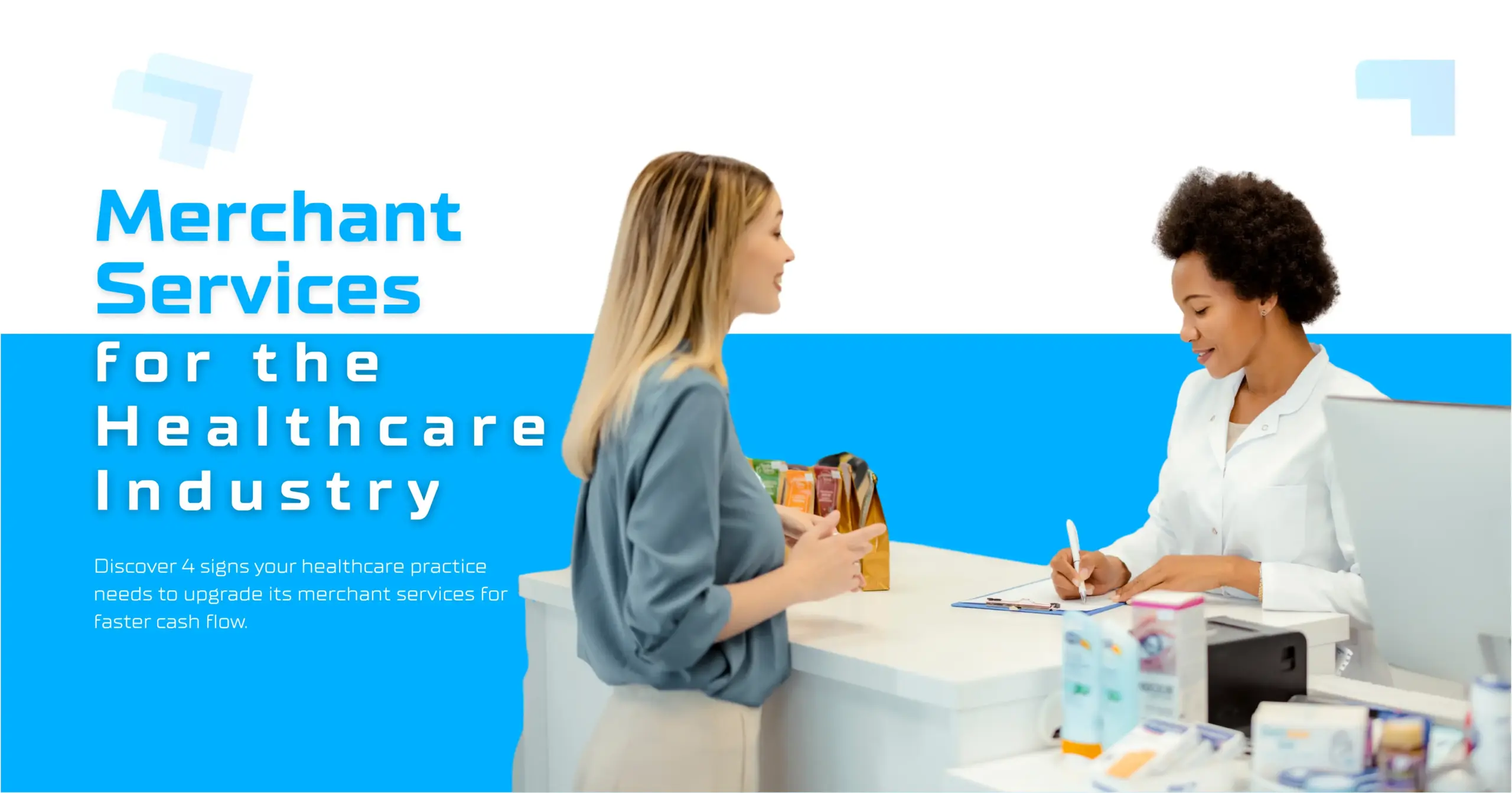
Merchant Services for the Healthcare Industry — 4 Signs to Look For!
Table of Contents —
- 1. Cash Posting is Becoming a Daily Nightmare —
- 2. Your Bad Debt and Collections Burden are Growing —
- 3. Patient Satisfaction Scores are Dropping over Billing —
- 4. Your Patient Demographics are Shifting —
- Frequently Asked Questions —
- Q1. What does "integrated payment processing" mean for a medical office?
- Q2. Are regular business merchant accounts safe to use for healthcare?
- Q3. What is Text-to-Pay, and do patients actually use it?
- Q4. How does modern payment tech reduce practice operating costs?
- Q5. How do merchant services handle HSA and FSA cards?
- Q6. What is the safest way to store a patient’s card on file?
- Q7. Can our office accept payment plans through our processor?
- Q8. Does a new payment system mean replacing our existing EHR software?
Somewhere in the world right now, a doctor is giving a patient a gentle lecture about ignoring early warning symptoms. We all know how it goes. A patient notices a bit of shortness of breath, a nagging pain, or sudden trouble focusing, but they brush it off. They figure it will go away on its own. But as any medical professional will tell you, ignoring a problem doesn’t make it disappear; it usually just makes the eventual treatment more complicated and a lot more expensive. This exact same script plays out in the business operations of medical practices every day, where ignoring outdated healthcare merchant services and clunky billing workflows turns minor operational headaches into full-blown financial crises.
Actually, the business side of a medical practice suffers from the same denial.
Many healthcare providers sit on operational warning signs every single day. They struggle with slow cash flow, mounting admin tasks, and frustrated patients, but they assume it’s just the cost of doing business in medicine. You see, the modern U.S. healthcare landscape has changed dramatically. High-deductible health plans and shifting patient demographics mean that old-school, manual payment processes aren’t just slow anymore, they are active financial liabilities.
If your practice is hitting roadblocks in its revenue cycle, it might be time to take a closer look at your merchant services setup. Let’s walk through four clear signs that your payment processing system needs a clean bill of health.
1. Cash Posting is Becoming a Daily Nightmare —
There is no doubt that healthcare payments are uniquely complicated. Well, according to data, the financial responsibility shifting onto patients has steadily climbed, with patients now directly responsible for a larger share of their medical bills than ever before. Patients are paying at different stages of care, copays at the front desk, deductibles online weeks later, or splitting bills into monthly installments.
When you layer in third-party insurance payers, Medicare Advantage plans, and traditional insurance, matching those incoming funds to the right patient accounts becomes incredibly messy. If your administrative staff is drowning in unposted or mis-posted cash, or if manual data entry errors are causing billing discrepancies, your current system isn’t cutting it.
- Manual data entry across multiple disconnected platforms slows down your daily operations and spikes human error rates.
- Staff hours are wasted every week trying to reconcile bulk electronic funds transfers (EFTs) with their corresponding electronic remittance advices (ERAs).
- Delayed cash posting leads to accidental duplicate billing statements, which immediately damages trust with your patients.
Modern merchant services solve this by automatically tying card transactions and digital payments directly to your practice management system or electronic health record (EHR). When a patient pays via a text link or at a smart terminal, the software posts the payment to the patient ledger in real time, freeing your team to focus on patient care rather than tracking down missing dollars.
2. Your Bad Debt and Collections Burden are Growing —
It used to be that insurance companies were the primary payers, and patients were secondary. Today, that era is officially over. A recent 2026 report by the Healthcare Financial Management Association (HFMA) revealed that patient balances now account for roughly 12% of a health system’s total net revenue. But here is the kicker: on average, practices only manage to collect about 31% of those patient billings.
Patients cost significantly more to collect from than insurance companies, and they take longer to pay. When your bad debt write-offs start climbing, it’s a clear symptom that your payment collection workflow is broken.
- Over-reliance on traditional paper statements leaves your collection cycle lagging behind by 60 to 90 days.
- A lack of upfront pricing transparency makes patients hesitant to swipe a card before or at the time of service.
- Missing card-on-file options mean you lose the ability to automatically process authorized balances once insurance finalizes the claim.
Upgrading to a healthcare-specific merchant provider allows you to collect payments faster. Card-issuing networks like Visa and Mastercard emphasize that providing transparent, flexible payment paths up front, like digital billing statements with one-click payment buttons, slashes collection friction. By offering automated payment plans directly through your portal, you make large bills manageable for patients while building a predictable, steady stream of revenue for your practice.
3. Patient Satisfaction Scores are Dropping over Billing —
Patient satisfaction is a multi-faceted equation. It is built on clinical outcomes, bedside manner, and the cleanliness of your facility. But a patient’s experience doesn’t end when they walk out your front door; it ends when their balance reaches zero. If a patient receives an confusing, hard-to-read paper statement three months after their appointment with no clear way to pay it online, their entire perception of your practice sours.
U.S. fintech leaders consistently point out that modern consumers expect the exact same convenience from their healthcare provider that they get from retail stores or rideshare apps.
- Patients get frustrated when they can’t pay using modern contactless methods like Apple Pay or Google Pay at the front desk.
- A lack of an online payment portal forces patients to call your office during business hours just to read a credit card number over the phone.
- Confusing billing communication creates unnecessary phone calls to your staff, creating long hold times and mutual frustration.
To help evaluate what digital touchpoints your practice might be missing, here is a quick breakdown of how modern payment experiences stack up against legacy billing methods.
| Billing Touchpoint | Legacy Healthcare Process | Modern Merchant Experience |
| Payment Options | Swiping magstripe cards or mailing paper checks. | Contactless EMV chips, Apple Pay, Google Pay, and online portals. |
| Billing Delivery | Mailing printed paper statements weeks after care. | Instant text-to-pay links and secure email statement delivery. |
| Balance Management | Manual, rigid in-house payment structures or collections. | Automated, self-service patient financing and card-on-file billing. |
| System Syncing | Manually typing card receipts into accounting software. | Real-time ledger posting through direct practice management integration. |
4. Your Patient Demographics are Shifting —
The way people prefer to pay is deeply tied to their lifestyle and demographic profile. The Federal Reserve’s 2025 Diary of Consumer Payment Choice highlighted some incredibly sharp shifts in how everyday Americans handle money. For instance, credit cards now account for roughly 35% of all consumer payments, while debit cards sit at 30%. But the real story is in how these cards are being deployed. Young adults aged 18 to 24 now use their smartphones for a staggering 45% of all their monthly payments.
Meanwhile, older adults or households with different income brackets lean on different payment mixes, including traditional cash or automated clearing house (ACH) bank transfers for larger balances.
- Younger patients may completely ignore a paper bill but will click and pay a secure text link within minutes of receiving it.
- A rising reliance on mobile wallets means your front-desk hardware needs to safely accept Near Field Communication (NFC) taps.
- Larger medical bills require secure, integrated ACH processing options regulated by NACHA to keep transaction fees low for your business.
If your practice caters to an aging population, you need highly secure, traditional EMV chip terminal solutions. If your patient base skews younger, mobile-first payment solutions are mandatory. Understanding your patient mix helps you choose a merchant provider that satisfies everyone, ensuring you never lose out on a payment simply because you didn’t support a patient’s preferred payment method.
Frequently Asked Questions —
Q1. What does “integrated payment processing” mean for a medical office?
It means your credit card terminals and online payment gateways talk directly to your healthcare scheduling and billing software. When a payment is processed, it automatically updates the patient’s file, saving your staff from typing the transaction data into two separate systems.
Q2. Are regular business merchant accounts safe to use for healthcare?
Not usually. Healthcare payments must strictly comply with HIPAA regulations to protect patient privacy. Standard retail merchant accounts often send patient names or treatment details across unencrypted receipts or statements, which can trigger severe compliance penalties. Healthcare-specific merchant services guarantee that data handling limits risk.
Q3. What is Text-to-Pay, and do patients actually use it?
Text-to-Pay allows your office to send a secure, personalized SMS link to a patient’s phone showing their outstanding balance. The patient clicks the link and pays using their stored mobile wallet or credit card. It is highly popular because it takes seconds and avoids the hassle of logging into a complex web portal.
Q4. How does modern payment tech reduce practice operating costs?
By automating the billing workflow. It cuts down on the physical costs of printing and mailing paper statements, reduces the hours your staff spends on manual reconciliation, and lowers your bad-debt write-offs by making it easier for patients to settle balances immediately.
Q5. How do merchant services handle HSA and FSA cards?
Healthcare-specific merchant accounts are set up with the correct medical Merchant Category Codes (MCC). This ensures patient Health Savings Account (HSA) and Flexible Spending Account (FSA) cards are approved instantly at checkout without getting automatically declined by the issuing bank.
Q6. What is the safest way to store a patient’s card on file?
Your merchant processor should use a system called tokenization. This replaces actual card numbers with unique digital codes. Your practice can safely charge authorized balances, like post-insurance copays, without ever storing or seeing the patient’s real credit card data.
Q7. Can our office accept payment plans through our processor?
Yes. Modern merchant services let you set up recurring, automated payment schedules. Instead of sending bills manually every month, your system automatically charges the patient’s card or bank account for an agreed-upon amount until their balance is paid off.
Q8. Does a new payment system mean replacing our existing EHR software?
Not at all. The right merchant solution is designed to work in the background. It plugs directly into your existing Electronic Health Record (EHR) or practice management system through pre-built integrations or secure portals, so your team doesn’t have to learn entirely new software.

More related blogs

- Financial Services
- Enhanced due diligence
How the Corporate Transparency Act Affects Merchant Account Approvals? 
- Financial Services
- Enhanced due diligence

- ACH Payment Processing
- pci compliant payment gateways
What Is PCI DSS 4.0 Level 1 Certification and Why Is It Important?
- ACH Payment Processing
- pci compliant payment gateways
- Business Incorporation Services
- how to structure a business for fast payment gateway approval
How Your Business Structure Shapes Payment Processor Approval in 2026?
- Business Incorporation Services
- how to structure a business for fast payment gateway approval


