November 21, 2025
POS technologies
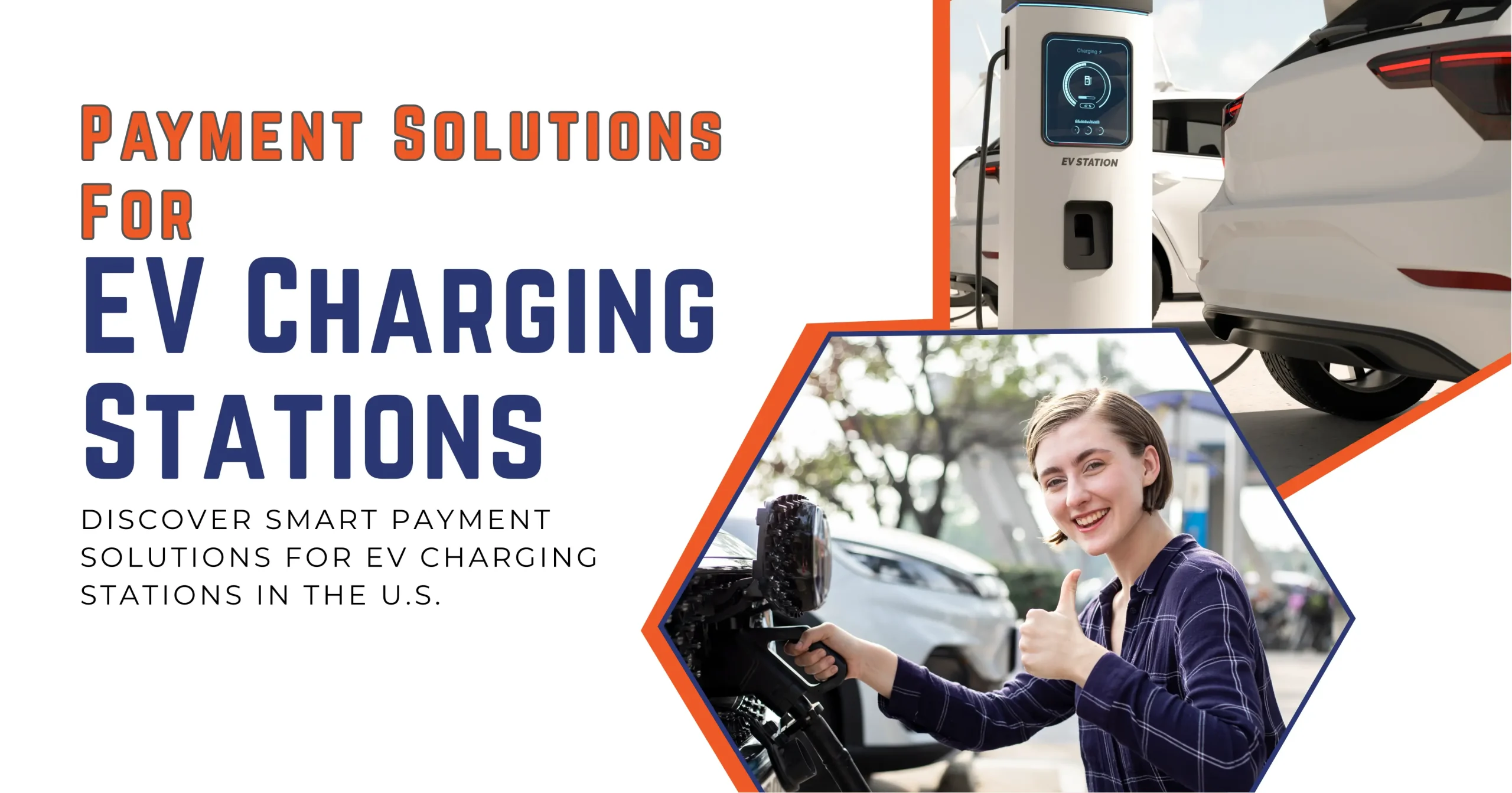
Payment Solutions for EV Charging Stations in the United States!
Electric vehicle (EV) adoption in the United States is surging, and with it, the need for smart, seamless payment solutions at charging stations. As an industry expert in fintech and payment processing, I’ll walk you through why modern payment systems are not just nice to have, but critical for EV network operators, drivers, and fleet managers alike.
Table of Contents —
- Why Smart Payment Solutions Matter?
- Transforming the EV Charging Experience with Contactless & QR Payments —
- Smart Billing & Payment Solutions for Corporate Fleets —
- How Hardware & Software Work Together in EV Charging Kiosk Payments —
- Security Best Practices —
- Cloud-Based Payment Systems for EV Charging Networks —
- Conclusion —
- FAQ — People Also Ask
Why Smart Payment Solutions Matter?
You see, the EV market in the U.S. is not a niche anymore. According to payment-industry observers, publicly available EV chargers have more than doubled in recent years. Meanwhile, the EV charging software market is projected to grow at a CAGR of over 34%. This rapid build-out of infrastructure means more charging points, more transactions—and new challenges around how payments are handled.
Why is seamless payment so essential?
- Driver experience: EV drivers expect charging to feel as effortless as filling up a gas tank. But if payment is clunky, requiring multiple apps, cards, or QR codes, it becomes a friction point.
- Interoperability across networks: With many charging networks (public, private, fast, slow), inconsistent payment options can discourage drivers from using certain stations.
- Operator efficiency and revenue: Charging station owners and network operators require reliable, scalable payment systems to process transactions, monitor usage, and manage billing. Without smart payment solutions, collecting and reconciling payments can become a headache.
Transforming the EV Charging Experience with Contactless & QR Payments —
As fintech advances, we’re seeing EV charging adopt some of the same slick payment experiences that consumers already love in retail. Contactless payments, such as NFC tap-to-pay using Apple Pay or Google Pay, and QR-based payments are becoming standard at modern charging kiosks. Why? Because they combine speed, familiarity, and security.
- Mobile Wallets & In-App Payments: Many charging networks offer apps where drivers can start sessions, pay via Apple Pay or Google Pay, monitor charging in real-time, and receive digital receipts. This in-app flow not only simplifies payments but also builds trust: drivers know exactly what they’re paying for and when.
- Live Monitoring & Digital Receipts: Apps that show charging status in real time, along with automatically generated receipts, help drivers budget and track their energy spend.
These contactless and QR solutions are especially relevant in the U.S., where mobile wallet adoption is widespread—and drivers expect modern payment options to be integrated into their daily routines.
Smart Billing & Payment Solutions for Corporate Fleets —
For businesses managing electric fleets, delivery companies, service providers, and corporate car programs, the payment story needs another layer of sophistication. Fleet operators don’t want to pay per driver or per station; they need consolidated cost management, insights, and control.
Some things fleet operators are looking for:
- Multi-vehicle billing: Instead of settling individual transactions, billing systems aggregate the charging cost of dozens or hundreds of vehicles.
- Consolidated invoicing and usage reports: Operators get one invoice for a fleet, plus rich reporting on who charged when, how much energy was used, and what the cost was.
- Cost control & reconciliation: Managers can set up policies (e.g., only allow certain charging stations, limit charging times or speeds) and reconcile spending via a central dashboard.
Fintech companies are increasingly offering EV-specific billing platforms. For instance, payments firms like Mastercard are collaborating with fleet-focused partners to enable interoperability and provide data-rich dashboards for charging behavior.
How Hardware & Software Work Together in EV Charging Kiosk Payments —
It’s not just about software: the physical payment hardware at the charging station matters deeply.
- POS Terminals: Many charging kiosks now include outdoor-rated POS (point of sale) terminals that accept contactless cards, chip cards, and mobile wallets. These rugged devices must withstand weather, tampering, and low maintenance.
- QR Code Display: Some chargers display a QR code on a screen. A driver scans it with their phone, which takes them to a secure payment gateway (via their browser or app).
- NFC Readers: Embedded NFC readers allow tap-to-pay directly at the charging pedestal.
- Payment Gateway Integration: Behind all of this, a payment gateway securely processes transactions and communicates with the charging network’s management software. This integration ensures that when a user taps or scans, the system recognizes the session, authorizes payment, and matches it with the right charging event.
To make it all work, the software running the charging network (the “back end”) must be tightly integrated with the payment gateway. This often involves APIs, SDKs, and real-time event handling to ensure seamless billing and a smooth customer experience.
Security Best Practices —
Clearly, payment at EV stations involves money and sensitive data, so security is non-negotiable. Here are some best practices and considerations:
- PCI DSS Compliance: Charging operators must ensure their payment terminals and gateways are PCI compliant so cardholder data is protected.
- Tokenization: Use tokenization so that a driver’s payment credentials (card or wallet) are not stored in raw form in your systems.
- Encryption: Secure all payment-related traffic, both at the device-to-gateway level and between backend services, with strong encryption (TLS).
- Fraud Monitoring: Implement real-time fraud detection to catch suspicious patterns, like too many rapid sessions or mismatched vehicle IDs.
- Secure Credential Storage: In apps, store payment details securely (use platform-secure vaults, encryption at rest).
- Regulatory Compliance: Stay on top of U.S. financial regulations, data privacy policies (like state-level data protection), and any energy-sector compliance requirements.
By building in these protections, EV charging network operators can build trust with drivers and avoid costly breaches or payment fraud.
Cloud-Based Payment Systems for EV Charging Networks —
To scale and manage geographically distributed charging networks, cloud-based payment systems are often the best route—and here’s why:
- Scalability: As your network grows from a few stations to hundreds or thousands, cloud payments can easily scale up.
- Disaster Recovery: Cloud-based infrastructure supports redundancy, backup, and failover to ensure payment systems are always available—even in the event of an outage.
- Multi-location Management: Operators can monitor payments, transactions, and billing across all sites from a centralized dashboard.
- Analytics & Reporting: Cloud platforms make it easier to collect, analyze, and act on transaction data—providing insights on utilization, peak hours, driver behavior, and more.
- Interoperability: A cloud-native payment service can integrate with different charging network software, in-app platforms, or billing tools to support roaming across networks.
Given that the U.S. EV charging payment gateway market is expected to grow strongly, with cloud and mobile payment adoption being major drivers, this model aligns well with long-term infrastructure goals.
Conclusion —
Well, as you can see, smart payment solutions are central to the future of EV charging in the U.S. They improve the driver experience, support growing public and private charging networks, and enable efficient fleet operations. By leveraging contactless payments, mobile wallets, secure gateways, and cloud systems, EV charging network operators can unlock new revenue, reduce friction, and build more resilient infrastructure.
As EV adoption continues its upward trajectory and as fleets electrify, the seamless integration of payments will be a key differentiator. In my experience, companies that prioritize modern, secure, and scalable payment systems will be ahead in building trusted, sustainable charging networks.
FAQ — People Also Ask
Q1: Why can’t EV charging just use traditional payment methods like cash or gas-station kiosks?
Traditional payment methods don’t integrate well with modern charging behaviors. EV users expect digital, contactless experiences. Also, cash or legacy kiosks don’t provide real-time usage data, digital receipts, or in-app session monitoring.
Q2: How expensive is it to deploy contactless/NFC payment hardware at charging stations?
It varies, but rugged outdoor-rated POS terminals and NFC readers will involve capital costs. However, these are increasingly cost-effective, especially when amortized over high usage and integrated via cloud payment platforms.
Q3: What happens if a payment fails while an EV is charging?
Good charging software will detect payment failure, pause or stop the session, alert the driver (e.g., via app), and log the incident. Secure gateways help by validating payment before full session authorization.
Q4: Are in-app payments safe?
Yes, when built well. Use tokenization, encryption, and secure credential storage. Many EV charging apps already follow these practices, just like mobile banking or retail payment apps.
Q5: How do fleet operators reconcile costs across hundreds of EVs?
They use consolidated billing platforms that aggregate usage, energy consumption, and cost per vehicle. These platforms offer dashboards, usage reports, and automated invoices, simplifying accounting and policy enforcement.

More related blogs
- Credit Card Flat Rate Pricing
- EcommerceTips
What is Visa’s Digital Commerce Authentication Program (DCAP) — Everything you need to know! 
- Credit Card Flat Rate Pricing
- EcommerceTips

- Echeck
- rolling reserves
Why ACH and Credit Card Limits Are Quietly Killing Merchant Growth?
- Echeck
- rolling reserves

- High Risk Merchant Services
- eCommerce payment plugins
Simplify Payment Plugin Integration for Online Businesses!
- High Risk Merchant Services
- eCommerce payment plugins


