April 20, 2023
High Risk Merchant Services
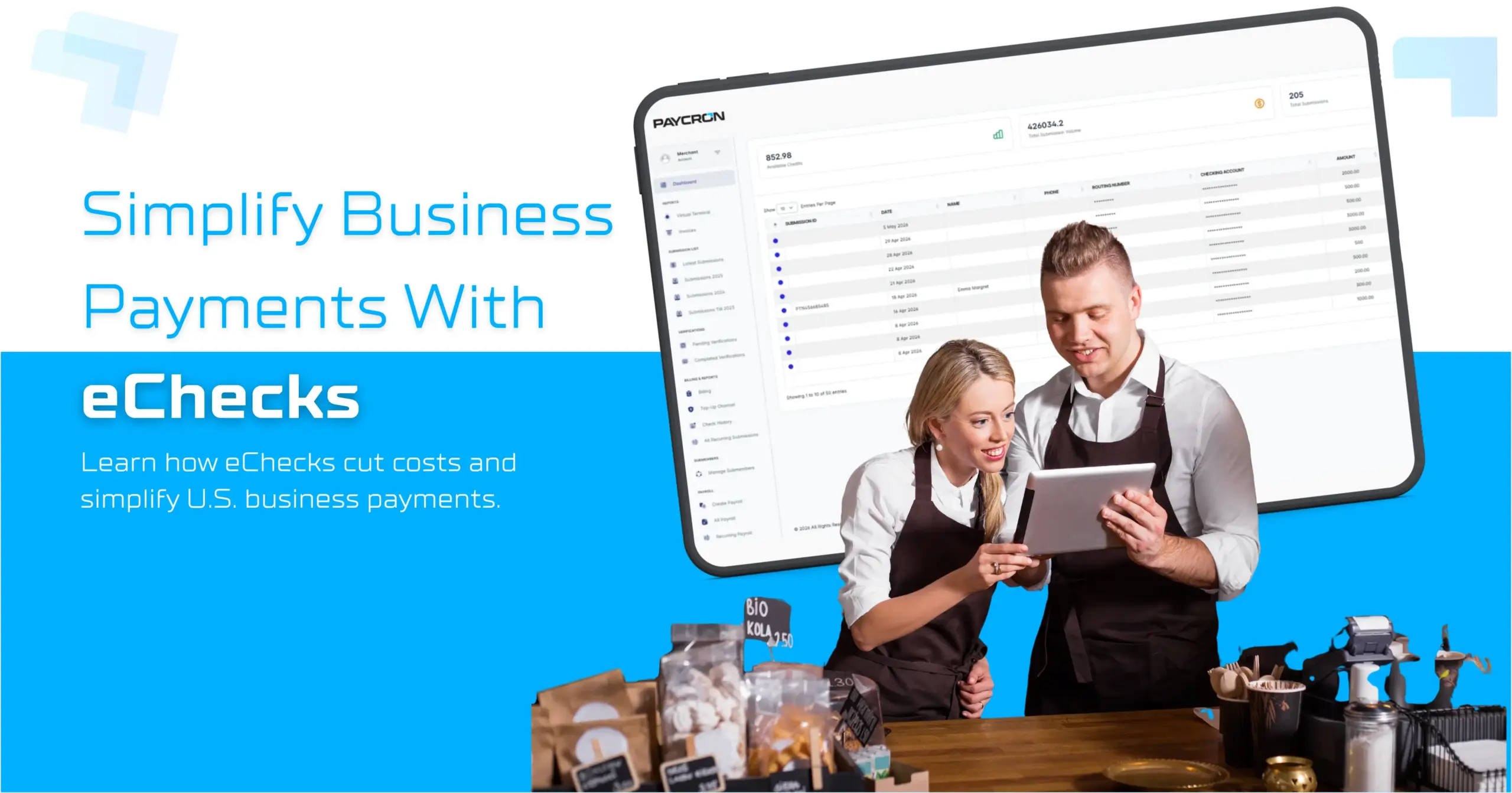
How Echecks Can Help Streamline Payment Processes For Businesses?
Table of Contents —
- Goodbye to manual processing —
- Faster processing times —
- Easy integration with business software —
- Strong security, quietly doing its job —
- Easy for customers to use —
- Works well for recurring and high-value payments —
- About international payments —
- Customizable payment controls —
- Lower processing costs —
- Better records, fewer headaches —
- Final thoughts —
- Frequently Asked Questions —
- 1. Are eChecks the same as ACH payments?
- 2. How long do eChecks take to clear?
- 3. Are eChecks safe for businesses?
- 4. Can customers dispute eCheck payments?
- 5. Do eChecks work for recurring billing?
- 6. Are eChecks cheaper than credit cards?
- 7. Do customers need special software?
- 8. Can small businesses use eChecks?
- 9. Are eChecks accepted nationwide?
- 10. Should I replace cards with eChecks entirely?
Technology keeps moving. Payments do too. And if you run a business in the U.S., you’ve probably felt this shift firsthand. Paper checks are slow. Wire transfers are expensive. Card payments? Convenient, sure, but the fees add up fast. So business owners have been quietly looking for something better. Something simpler. That’s where eChecks come in.
eChecks aren’t new. But the way businesses use them? That’s changed a lot.
Whether you run a small service business or manage payments for a growing company, eChecks can make your payment process smoother, cheaper, and more predictable. Let’s walk through how they actually help, without the sales talk.
Goodbye to manual processing —
Remember printing checks, signing them, stuffing envelopes, and hoping nothing got lost?
Yeah. That’s still happening in some places. But most U.S. businesses have moved on.
With eChecks, payments are created, authorized, and processed digitally. Once a customer approves a payment, the system handles the rest. No manual data entry. No chasing paperwork. No bank runs.
And honestly, fewer human steps mean fewer mistakes. Account numbers don’t get mistyped as often. Checks don’t get mailed to the wrong address. That alone saves time and stress.
So instead of spending hours on payment admin, you can focus on running your business. Or just go home on time.
Faster processing times —
eChecks move through the ACH network, which is managed by NACHA. Today, most standard ACH payments settle in one to two business days. Same-day ACH is also widely available for eligible transactions.
That’s much faster than paper checks, which can take a week or more once you factor in mailing, deposits, and clearing.
Are eChecks instant? No. And that’s okay.
They’re predictable. And predictable cash flow is often more valuable than instant payments with high fees.
Easy integration with business software —
Here’s something business owners really care about: “Will this work with my system?”
In most cases, yes.
Modern eCheck solutions integrate with accounting tools, invoicing platforms, and ERPs that U.S. businesses already use. You can send invoices, accept payments, and reconcile transactions without switching between five different tools.
This shift toward connected systems is something banks and card networks like Visa and Mastercard have also been pushing, just in different ways.
The goal is the same: fewer gaps between payment, record, and reporting.
Strong security, quietly doing its job —
Let’s clear something up.
eChecks are no less secure than cards. In fact, in many cases, they’re more controlled.
eCheck payments use bank-level authentication, encryption, and verification steps. Account access is permission-based. And fraud monitoring has improved a lot over the last few years, driven by guidance from regulators and oversight from the Federal Reserve.
No system is perfect. But eChecks reduce some common risks, like stolen card numbers and chargeback abuse, that hit card-heavy businesses hard.
You don’t really notice good security. And that’s kind of the point.
Easy for customers to use —
There’s a myth that customers don’t like paying by eCheck.
In reality, they care about two things: trust and convenience.
If the payment form looks clean, secure, and familiar, most U.S. customers are perfectly comfortable entering their bank details, especially for rent, utilities, B2B invoices, subscriptions, and large payments.
And once bank details are securely stored, recurring payments become simple. No expired cards. No surprise declines.
For many customers, that’s a relief.
Works well for recurring and high-value payments —
eChecks really shine when payments are:
- Recurring
- High in value
- Business-to-business
Credit cards weren’t designed for $10,000 invoices or monthly retainers. eChecks were.
That’s why many U.S. fintech platforms now position eChecks as a primary option for payroll-like payouts, vendor payments, and subscription billing.
It’s not flashy. It’s practical.
About international payments —
You might hear that eChecks work globally. That’s… partially true.
eChecks are best for U.S.-based bank accounts. Some providers support cross-border ACH-style payments, but they’re not universal, and they’re not instant.
For U.S. businesses paying international vendors, eChecks can still help, especially when paired with fintech platforms that handle currency conversion and compliance behind the scenes.
Just don’t expect eChecks to replace wires in every global scenario. They’re a tool, not magic.
Customizable payment controls —
One underrated benefit of eChecks is control.
You can set payment schedules. Send reminders. Limit payment amounts. Pause or retry transactions. All without awkward follow-up emails.
These features aren’t about automation for its own sake. They help you manage cash flow without constantly chasing people.
And honestly, that makes business relationships smoother.
Lower processing costs —
Credit card fees can range from 2% to 4% once everything is added up. On large volumes, that’s real money.
eCheck fees are typically flat or very low per transaction. Over time, the savings add up, especially for service businesses, B2B companies, and high-ticket sales.
Many U.S. fintech leaders now recommend a mix: cards for convenience, eChecks for cost control.
That balance keeps margins healthy.
Better records, fewer headaches —
Every eCheck creates a digital trail. Payment status, timestamps, authorization details, it’s all there.
That makes audits easier. Disputes simpler. And bookkeeping far less painful.
When something goes wrong, you can actually trace it. That’s not always true with paper checks.
Final thoughts —
eChecks won’t replace every payment method. And they shouldn’t.
But for U.S. businesses, they solve real problems: slow payments, high fees, messy records, and unpredictable cash flow.
They work quietly in the background. And sometimes, that’s exactly what you want.
Frequently Asked Questions —
1. Are eChecks the same as ACH payments?
Yes. eChecks are a digital way to initiate ACH bank transfers.
2. How long do eChecks take to clear?
Usually 1–2 business days. Same-day ACH may be available.
3. Are eChecks safe for businesses?
Yes, when processed through compliant U.S. providers.
4. Can customers dispute eCheck payments?
Yes, but disputes are typically lower than card chargebacks.
5. Do eChecks work for recurring billing?
They work very well for subscriptions and retainers.
6. Are eChecks cheaper than credit cards?
In most cases, yes, especially for large payments.
7. Do customers need special software?
No. They just need a U.S. bank account.
8. Can small businesses use eChecks?
Absolutely. Many small businesses rely on them.
9. Are eChecks accepted nationwide?
Yes, across the U.S. banking system.
10. Should I replace cards with eChecks entirely?
Not necessarily. Many businesses use both.

More related blogs
- Electronic Check Payment
- how can a service business collect payments by phone
The Ultimate Expert Guide to Text to Pay and Payment Links for Service Businesses. 
- Electronic Check Payment
- how can a service business collect payments by phone
- Credit Card Interchange Fee Management
- transaction laundering
How Payment Risk Is Actually Assessed by Processors — Beyond Credit Scores!
- Credit Card Interchange Fee Management
- transaction laundering
- Online Credit Card Processing
- merchant services
What is Visa’s Digital Commerce Authentication Program (DCAP) — Everything you need to know!
- Online Credit Card Processing
- merchant services


