September 22, 2025
Merchant Services
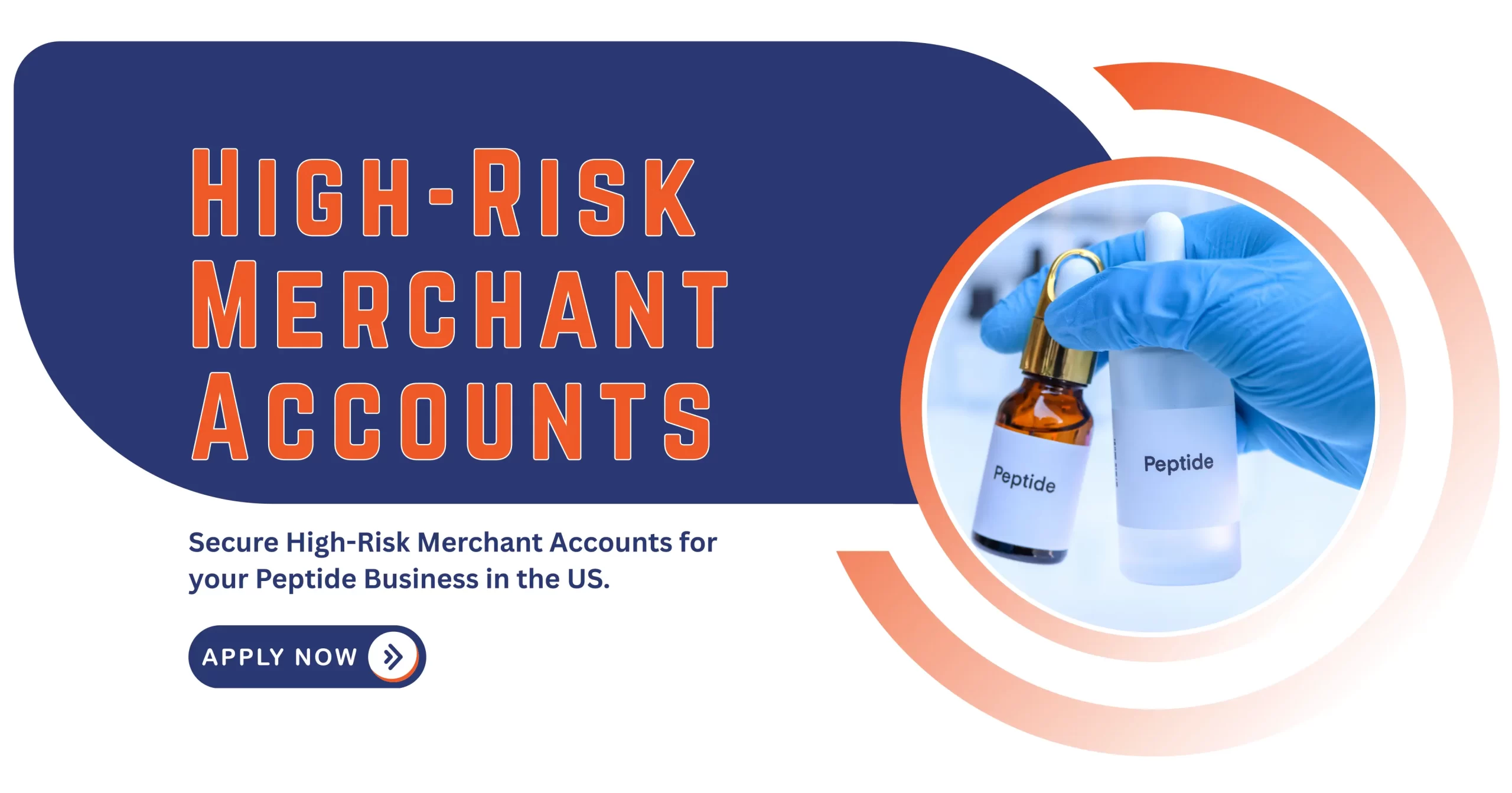
High-Risk Merchant Accounts for Peptide Businesses in the US!
The peptide industry in the United States is booming, but it also comes with challenges, especially when it comes to payment processing. Most traditional processors flag peptides as too risky, leaving many merchants frustrated with frozen accounts and stalled cash flow. Because of the nature of the business category of peptides, many credit card processors decline and put this category into their MATCH list. That’s why a specialized solution is essential. With Paycron, you’re not only getting access to tailored eCheck Payment Processing but also one of the highest approval rates in the market, with 99% approval for High-Risk Merchant Accounts with eCheck for peptide businesses in the US.
Note: We do not provide credit card payment processing for the Peptide industry.
Table of Contents:
- Why Peptide Businesses in the US Need a High-Risk Merchant Account for Payment Processing?
- The Role of Compliance in Payment Processing for Peptide Merchants —
- Why Paycron Is the Right Choice for Payment Solutions in the Peptide Industry —
- How to Get Approved for a High-Risk eCheck Merchant Account with Paycron —
- Summary Table —
- Conclusion —
- People Also Ask —
- Q: What is a “high-risk echeck merchant account”?
- Q: What are rolling reserves or holdbacks?
- Q: How long does the high-risk merchant approval take?
- Q: Can I use US-incorporation services to get around lack of documents?
- Q: What happens if regulations change (as they often do with peptides)?
- Q: Do I need prescription or medical license to sell peptides?
- Q: What are typical fees for high-risk merchant accounts?
- Q: Can international merchants sell peptides to US customers?
Regulatory Ambiguity / Legal Scrutiny:
- Many peptides are not FDA-approved for human therapeutic use. If they are sold “for research only,” or “not for human consumption,” processors and regulators still scrutinize marketing claims, labeling, sourcing, etc.
- Laws and guidelines (e.g., via the FDA and state regulations) have tightened, especially around peptides used in weight loss/wellness (GLP-1s, etc.). Regulatory risk is now higher.
Chargeback & Fraud Risk:
- Because customers may dispute purchases (especially with ambiguous claims or unfamiliar products), chargeback rates tend to be higher. Payment processors dislike high chargeback ratios.
- Misrepresentation of product, unexpected side effects, delayed shipping, etc., can all fuel disputes.
Payment Brand & Card Network Policies:
- Entities like Mastercard have programs (e.g., BRAM – Business Risk Assessment & Mitigation) that specifically highlight unapproved pharmaceuticals, research peptides, and nutraceuticals as high-risk categories.
- Card networks expect strong compliance, age verification, honest labeling, etc., or they may remove acquirer support or impose penalties.
Bank Underwriting and Risk Appetite:
- Many traditional acquirers or gateways avoid sectors with blurry regulatory status or high refund/dispute risk. Peptide businesses often are declined by mainstream processors like Stripe, PayPal, Square, etc., for those reasons.
- When accepted, underwriting is more rigorous, reserves are required, fees are higher, and ongoing monitoring is strict.
Customer Perception & Marketing Sensitivity:
- Claims of anti-aging, weight loss, recovery, and performance enhancement often draw scrutiny from the FTC, FDA, and other regulators. False or unsubstantiated claims can lead to legal action or warning letters.
Recent Trends Making Risk Even Higher:
- In 2025, Mastercard’s BRAM update (GLB 11691.1) increased enforcement over unapproved peptides or “research only” products.
- FDA has expanded certain peptides under regulatory categories (e.g., safety risk expansions), which increases the compliance burden.
Why Peptide Businesses in the US Need a High-Risk Merchant Account for Payment Processing?
The Reality of Payment Processing for Peptide Sellers:
If you’re operating a peptide business in the United States, you’ll quickly find that traditional payment providers like PayPal, Stripe, or Square just don’t stick. Even if you get approved at first, chances are your account will be frozen or terminated once transactions start flowing. That’s because the peptide category is automatically flagged as high-risk.
Why Banks and Card Networks Consider Peptides “High Risk”:
This label isn’t arbitrary—it’s tied to the risks banks face. Regulatory bodies like the FDA and FTC have strict oversight, especially when products are marketed for weight loss, anti-aging, or muscle recovery. Add to that the higher chargeback rates in the peptide industry, and it’s easy to see why banks are cautious. Customers may dispute charges if they misunderstand the product, see unexpected results, or simply regret the purchase.
Card networks like Visa and Mastercard also classify unapproved pharmaceuticals, supplements, and research chemicals under restricted categories. Their compliance programs, such as Mastercard’s BRAM, specifically target industries like peptides. That means standard merchant accounts are simply not built to handle this risk.
Why a High-Risk Merchant Account Is Essential:
A high-risk merchant account is designed for businesses like yours. The underwriting process is more rigorous, but the benefit is stability—you won’t lose your ability to process payments overnight. Yes, the fees can be higher, and you may need to maintain a rolling reserve, but in exchange, you get security, compliance support, and peace of mind. For a peptide business in the US, that reliability isn’t optional—it’s the foundation of long-term growth.
The Role of Compliance in Payment Processing for Peptide Merchants —
Compliance isn’t optional; it’s central. Here’s what compliance tasks mean in this industry, and why they matter so much:
Product Labeling & Claims:
- Clear labeling: “for research only” if applicable, or if for human use then meeting medical standards. Avoiding misleading health claims.
- Certifications or lab tests (Certificates of Analysis) may be required to show product purity and safety.
Licensing, Certifications & Approvals:
- Where peptides are regulated as drugs or pharmaceuticals, appropriate licenses, pharmacy compounding credentials, or prescription pathways are necessary.
- LegitScript or similar certification can help demonstrate legitimacy to payment providers.
Legal & Regulatory Adherence:
- Following FDA rules, state laws (which may vary state by state), import/export rules, and handling of controlled substances, if any.
- Keeping up with recent updates: e.g., FDA expanding peptide categories under safety regulations, state laws on supplements, or age restrictions.
Website & Marketing Transparency:
- Disclosure of terms, refund policy, shipping timeline, and disclaimers.
- Ensuring that marketing messages are accurate, customers are given all essential information. Non-compliance here leads to regulatory enforcement or chargebacks.
Fraud Prevention & Chargeback Management:
- Using fraud tools: AVS (Address Verification System), CVV checks, velocity checks, device fingerprinting, etc.
- Processes for handling refunds carefully, documenting transactions, having proof of delivery, etc.
KYC / AML / Banking & Underwriting:
- Payment processors and acquiring banks require Know Your Customer (KYC) checks, Anti-Money Laundering (AML) protocols, vendor & supplier validation.
- Underwriting looks at bank statements, business registration, identity documents, past processing history.
Ongoing Monitoring & Audits:
- Because the peptide space is dynamic (laws, FDA guidance, and card network rules), businesses must regularly review compliance.
- Processors/acquirers often audit websites, claims, marketing, and refund/chargeback data.
Compliance reduces risk not only of legal fines or regulatory closure, but also of payment processor issues: freezes, closures, or being blacklisted.
Why Paycron Is the Right Choice for Payment Solutions in the Peptide Industry —
Assuming Paycron offers what many high-risk payment providers do, here’s why, as an industry expert, I believe Paycron (if it follows best practices) is well-positioned to serve peptide businesses:
Specialization in High-Risk Verticals:
- Payment providers that know the peptide/nutraceutical / “research chemical” space understand what compliance documents are needed, and what red flags to avoid.
- Paycron’s experience (hypothetically) in this area means fewer surprises for the merchant.
Robust Underwriting & Compliance Support:
- A processor that helps merchants compile articles of incorporation, EIN, SSN, bank statements, etc., will speed up approvals.
- If Paycron also helps with or has expertise in certifications (LegitScript, etc.), that’s a plus.
Transparent Pricing & Terms:
- Predictability in fees, rolling reserves, and chargeback handling.
- Clear payout cycles (especially important given reserves).
Technology & Risk Controls:
- Fraud prevention tools, chargeback mitigation, secure payment gateway, and PCI compliance.
- Clear policies for marketing claims, shipping, refunds, etc.
Support & Customer Experience:
- Having an expert team to guide merchants through the domains of legal/regulation/policies.
- Fast customer service for any issues.
US-Based Banking & Incorporation Options:
- For foreign or semi-established peptide sellers, having the option to incorporate in the US or set up a US entity helps a lot with trust, banking, and merchant account approvals.
If Paycron aligns with these, then they are a strong choice for peptide merchants who truly want sustainable, compliant operations.
How to Get Approved for a High-Risk eCheck Merchant Account with Paycron —
Step 1: Submit Your Application –
The journey starts with a detailed application. You’ll provide information about your business entity, website, product catalog, expected monthly sales, and average ticket size. This initial step gives underwriters a first impression of your legitimacy…Apply Now to Get Your eCheck Merchant Account!
Step 2: Gather the Required Documents –
Next comes documentation. Typically, Paycron asks for Articles of Incorporation, your EIN, your SSN, and banking details—either a voided check or recent bank statements from a US business account. If you already process payments elsewhere, three months of merchant statements can strengthen your application. You may also need Certificates of Analysis or supplier invoices to prove product authenticity and compliance.
Step 3: Underwriting and Verification –
Once your documents are submitted, Paycron’s underwriting team reviews them carefully. They’ll check that your website is transparent, your refund and shipping policies are clear, your product labeling is accurate, and you’re not making medical claims that could attract regulatory issues. They’ll also ensure your payment setup is secure and PCI-compliant.
Step 4: Account Approval and Activation –
If everything aligns, you’ll receive approval. Your merchant account will be set up, and Paycron will integrate it with your payment gateway so you can begin processing transactions. Depending on your risk profile, you may see rolling reserves or closer monitoring in the early stages, but you’ll have the critical ability to accept payments without fear of sudden shutdowns.
Step 5: What If You Don’t Have All the Documents?
Not every peptide business is fully structured when they first apply. Maybe you don’t yet have a US bank account or an incorporated entity. That’s not the end of the road—Paycron also offers US incorporation services. They can help you register a company (LLC, S-Corp, etc.), obtain an EIN, and open a legitimate bank account. Once you’re set up, you’ll have everything needed for smooth underwriting and approval.
The Bottom Line on Approval:
Getting approved for a high-risk merchant account isn’t about cutting corners, it’s about preparation. By being transparent, submitting the right documents, and keeping your business compliant, you can fast-track the approval process. With Paycron’s guidance, peptide businesses in the US can move from uncertainty to reliable payment processing, which is the real key to scaling successfully.
Summary Table —
| Topic | Why It Matters for Peptide Business |
| Regulatory Risk | Mis-classification, FDA/State regulation, marketing claims, legal exposure |
| High/Risk Classification | Impacts ability to get merchant account; standard processors tend to reject |
| Compliance | Impacts approval, avoids account freeze, lawsuits, card brand penalties |
| High-Risk Merchant Accounts | Gives access where standard accounts won’t; but higher cost & scrutiny |
| Paycron as Solution | If it offers specialist high-risk processing, US entity services, compliance support, strong risk tools, good customer service, it’s a strong partner |
| Approval Steps | Clear documentation, legal entity, bank account, ALE/AML/KYC, product transparency, underwriting |
| Alternative Path if Docs Missing | Take advantage of US incorporation services, gather required papers, then use them to satisfy underwriting |
Conclusion —
At the end of the day, running a peptide business in the US is both an exciting opportunity and a unique challenge. The regulatory scrutiny, chargeback risks, and strict card network rules mean you can’t rely on standard processors. What you need is stability, compliance, and a payment partner that understands your industry inside out.
That’s where Paycron comes in. With a proven 99% approval rate, deep experience in high-risk verticals, and even incorporation support for those who need it, Paycron provides more than just payment processing, it provides peace of mind. By securing a high-risk merchant account through a trusted provider, you can stop worrying about shutdowns and start focusing on what matters most: growing your peptide business with confidence in the US market.
People Also Ask —
Q: What is a “high-risk echeck merchant account”?
A high-risk eCheck merchant account allows you to handle chargebacks more efficiently and streamline payments better than traditional credit card processing. It offers a more stable and secure payment channel for businesses that may face challenges with standard merchant accounts.
Q: What are rolling reserves or holdbacks?
These are portions of your processed funds that the processor (or acquiring bank) holds for a fixed period (often several months) to cover possible chargebacks, refunds, or regulatory adjustments. Once you maintain good performance (low chargebacks etc.), reserves may be released.
Q: How long does the high-risk merchant approval take?
Usually depends on how prepared you are: if all documents are in order, it could be a few business days to a couple of weeks. If you lack key documents or have had prior issues, underwriting might take longer.
Q: Can I use US-incorporation services to get around lack of documents?
Yes, incorporating in the US, getting an EIN, opening a US business bank account are very helpful. That said, after incorporation, you still need to meet other requirements: proper labeling, supplier documentation, compliance of marketing, bank statements etc.
Q: What happens if regulations change (as they often do with peptides)?
You must stay updated. For example, FDA guidance or state laws may change what peptides are considered safe or whether they require prescription. Payment processors will expect you to adapt — updating labeling, marketing, disclosures, possibly removing certain SKUs. Falling behind risks account suspension, fines, chargebacks.
Q: Do I need prescription or medical license to sell peptides?
If a peptide is a regulated drug (or compound) intended for human therapeutic use, then yes, a prescription/licensure is typically required. But many peptide businesses attempt to stay in “research only” or supplement categories. However, the “research only” label doesn’t always absolve legal/regulatory/policies related risk.
Q: What are typical fees for high-risk merchant accounts?
Fees are higher than standard accounts. You may see higher per-transaction percentage fees, monthly fees, setup fees, higher chargeback fees, and costs of reserves. Exact numbers depend on volume, average ticket, product type, fraud history, etc.
Q: Can international merchants sell peptides to US customers?
Yes, but risk is even higher. More documentation is required; shipping laws, import/export rules need attention, and US payment processors/acquirers often prefer domestic entities or at least with US bank accounts and US legal presence.

More related blogs

- ecommerce merchant accounts
- payment processing
What is Visa’s Digital Commerce Authentication Program (DCAP) — Everything you need to know! 
- ecommerce merchant accounts
- payment processing

- Credit Card Same-Day Funding
- Merchant Account
Why ACH and Credit Card Limits Are Quietly Killing Merchant Growth?
- Credit Card Same-Day Funding
- Merchant Account

- Credit Card Payment Processing
- secure payment integration
Simplify Payment Plugin Integration for Online Businesses!
- Credit Card Payment Processing
- secure payment integration


